 |
 |
 |
 |
 |
 |
 |
 |
 |
 |
|

|


Page 3 Of Our CTP Units Collection
(Information & Images Courtesy Activision)
ROBOTIC PLANT 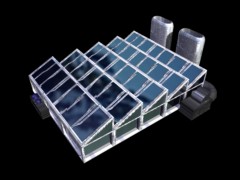 Robotics – the fusion of mechanical and computational sciences – revolutionized automation. Although automated factories first appeared in the late 20th Century, these early factories were plagued by hardware or software failures, high costs and slow progress. By the mid 21st Century, new Robotic plants offered "virtual sensors" to monitor hardware, and intelligent software to rapidly program new behaviors. Using Virtual Reality gear, managers trained the robots in virtual space.
|
ZERO G MANUFACTURING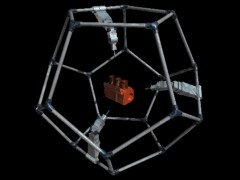 In the first half of the 22nd Century, Space Cities existed as military outposts and overpriced spas. However by 2150, molecular chemists developed techniques for growing pure crystals and organic chemicals in Zero-G. Freed from gravity's pull, molecules proved easy to separate using magnetic centrifugal spin cycles. Then, in perfect proportion and freed of impurity, elements combined into crystalline forms with perfect "dense packing" between each molecule. As a result, in the 22nd century, pharmaceutical refining and nanoassembly plants moved off-world.
|
SHIP OF THE LINE 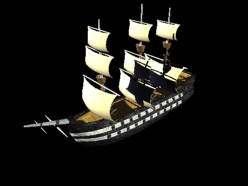 From the Mechanical Clock and European obsession with automatons, Europeans developed machine tools in the late 1700's. This led in particular to the cannon boring lathe and Maudley's assembly line system for making ship blocks. Together these two inventions greatly increased the power of ship's cannons and lowered ship prices.
|
HOSPITAL 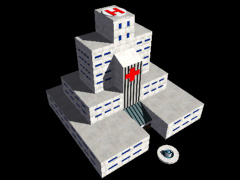 The founding of hospices and leper colonies – dates from the 6th Century A.D. By the 12th and 13th Century, the primitive hospice had developed into the modern hospital – but only in the 17th and 18th Century did reform reduce crowding to one patient to a bed. Although medical knowledge may not have been easily accessible for the poor, (alas, times still have not changed), for the wealthy, medical knowledge offered hope and thus happiness.
|
GEOMETRY 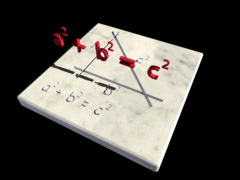 Beginning in 3500 BC, humanity developed a system of counting to track business deals and to measure land. By the middle of the third millennium BC, the Egyptians could calculate the area and volume of simple geometric shapes using a base-10 system. This laid the foundation of geometry. With geometry, the Greeks revolutionized mathematics. This conceptual approach -- with its postulates, proofs, and theorems -- provided a foundation for logic and argument for the next two thousand years.
|
SAMURAI 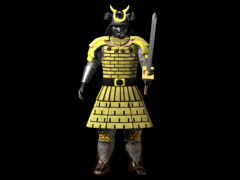 In 9th century feudal Japan, the need for skilled warriors to protect valuable arable land increased. The bushi-dan, or samurai class, acted in this capacity for their masters, such as the shogun, the emperor who "subdues barbarians", or the daimyo, a feudal landowner. They mastered the use of the most current weapons, beginning with the bow and arrow, and eventually learning remarkable swordsmanship. Under the strict forms of military etiquette, the Samurai's honor depended on his loyalty to his master, whether the shogun or daimyo, and would commit seppuku, ritual suicide, if he failed his mission.
|

Apolyton Civilization Site Copyright © Robert Plomp and Jeroen Schweitzer
All trademarks and trade names are the properties of their respective owners.